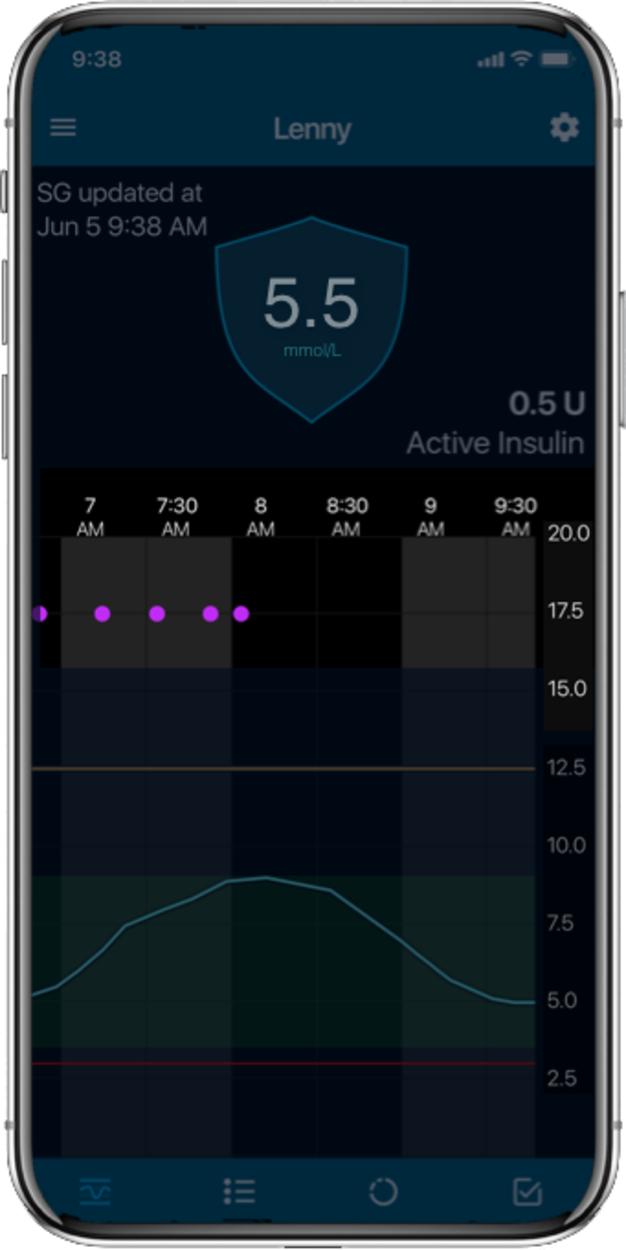
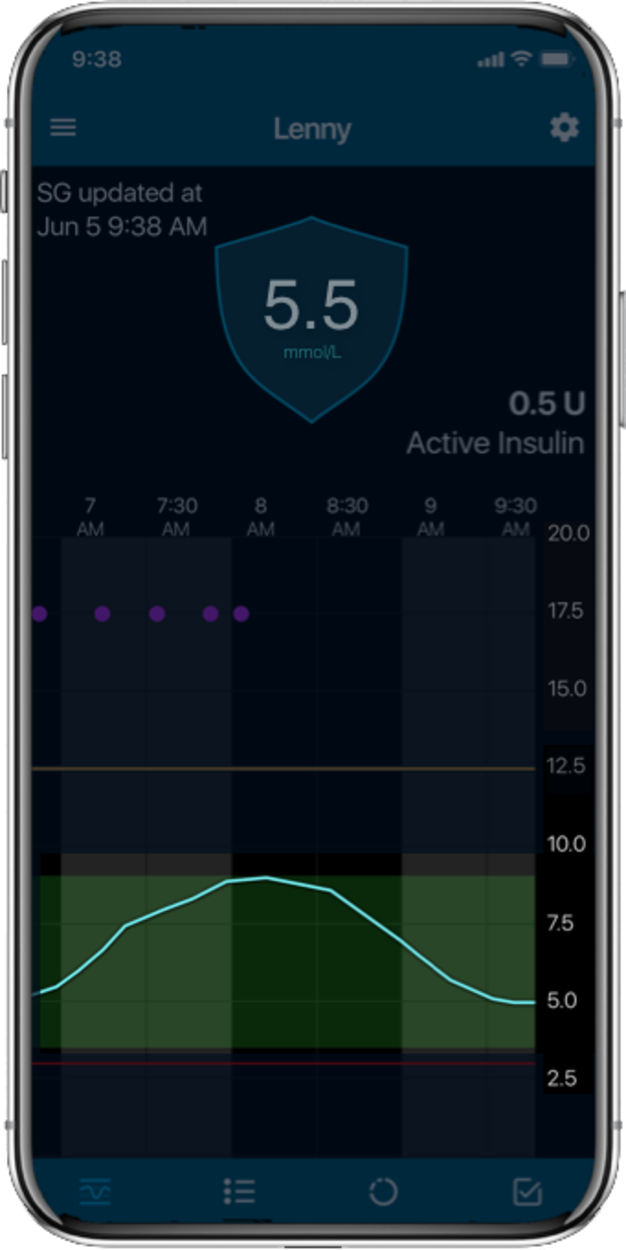
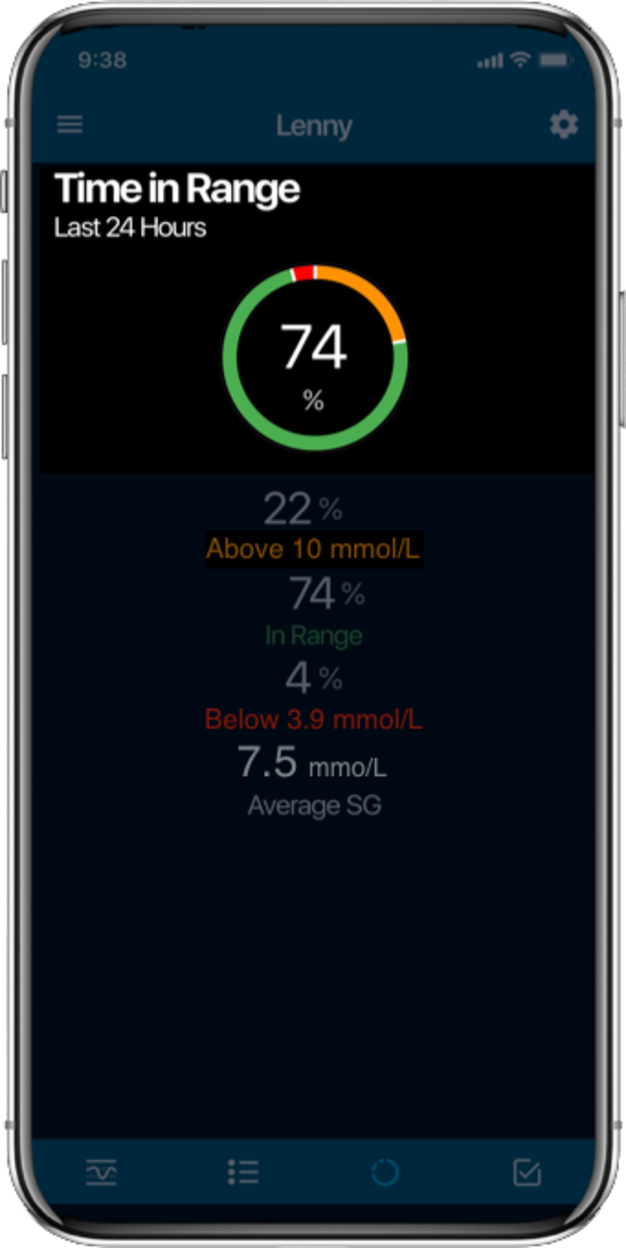
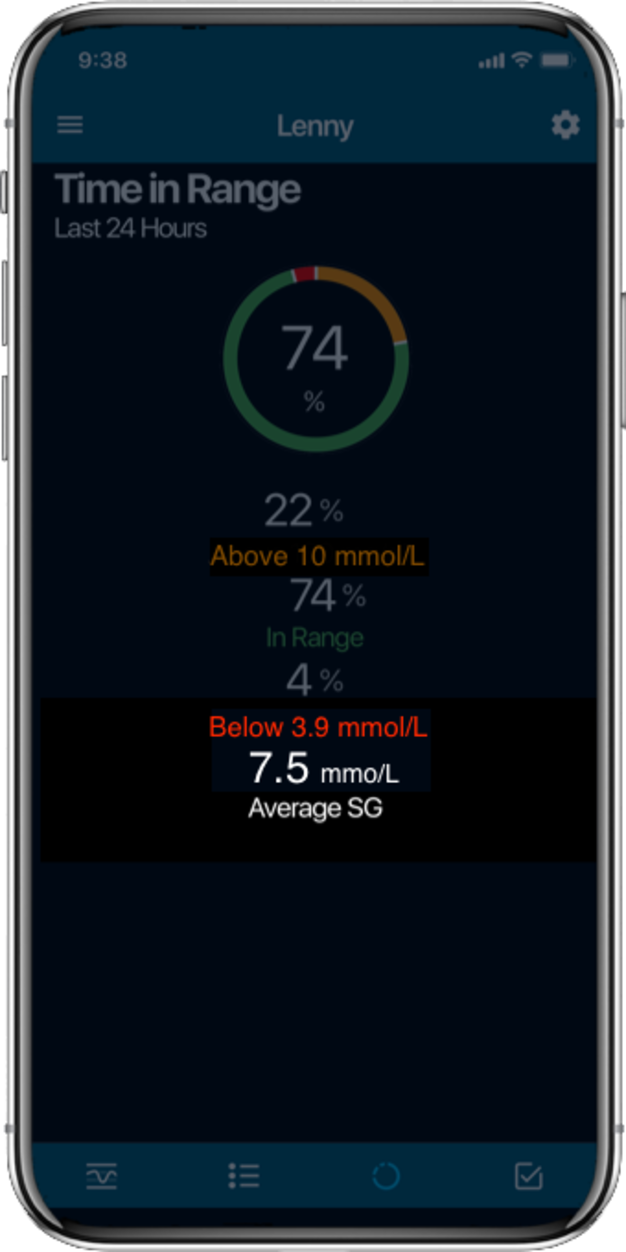
More Time in Range,2,  day and night.

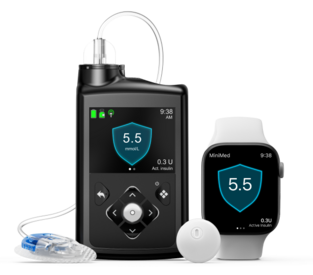
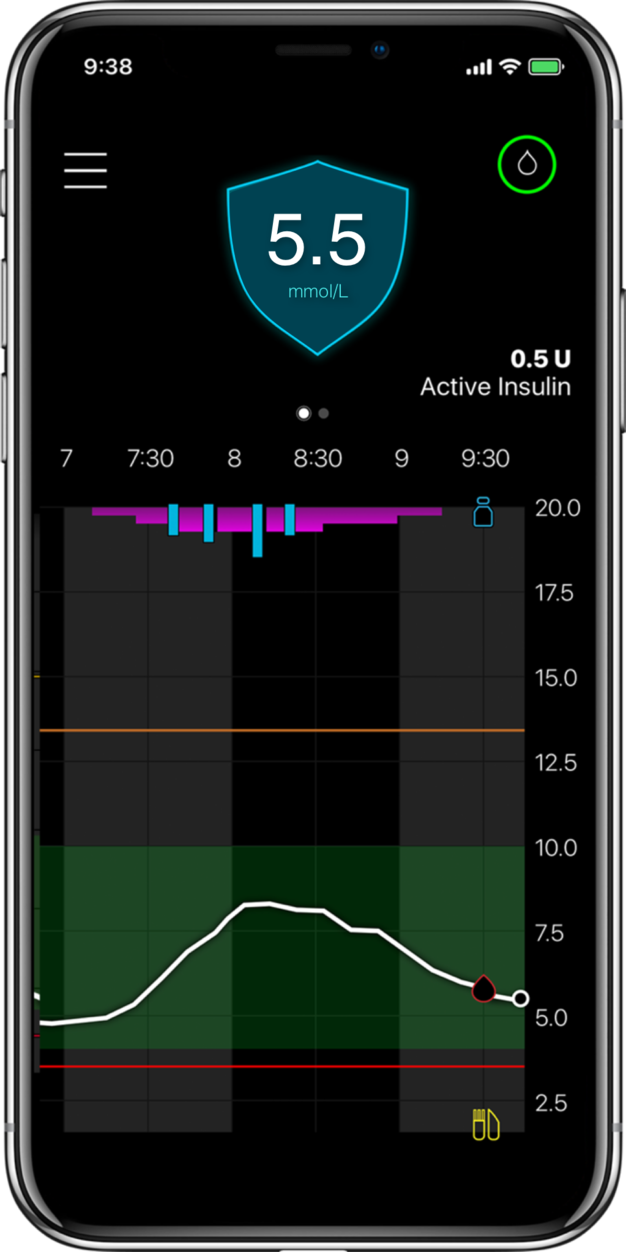
The MiniMed™ 780G system automatically  adjusts insulin delivery and corrects glucose levels every 5 minutes 24/7, requiring no finger pricks. 

0
%
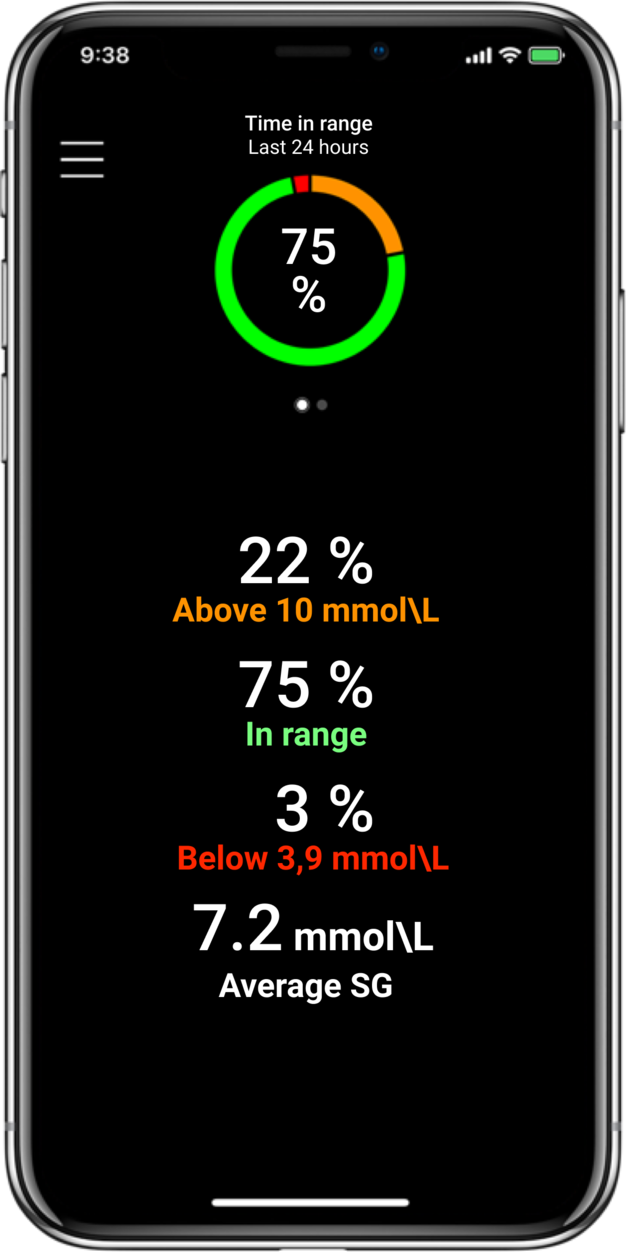
Time in Range3
Real world data shows
0
%
Overnight Average

Time in Range4, 

SmartGuard™ technology

Our most advanced insulin pump system
with SmartGuard™ technology

SmartGuard™ technology continuously anticipates your insulin needs, adjusts insulin delivery, and corrects highs automatically,  while helping to protect you from lows.2 And with the Meal Detection feature, the system can detect if you’ve missed a meal dose and give you more insulin when you need it to help reduce post-meal highs.

Meal detection
Stronger correction
bolus allowed while
meal is detected

3.9 10 Glucose levels (mmol/l) 13.3 Meal Detection™Stronger correctiondose given whena meal is detected. 12 p.m. 2 p.m. 8 a.m. 10 a.m. Suspends insulindelivery post-workoutto avoid a low Predicts where your glucoselevels are headed and how muchinsulin you'll need based on yourreal-time data and past trends. Glucose levels Automatic background insulin Automatic correction insulin Automatic correction dose with Meal Detection™ technology
10 a.m.2 p.m.12 p.m.8 a.m. Glucose levels (mmol/l)13.3103.9

Glucose levels

Automatic background insulin

Automatic correction insulin

Automatic correction dose with Meal Detection™ technology

For illustrative purposes only.

Things you should know about the MiniMed™ 780G

Advanced algorithm

The algorithm adapts to you providing better time in range than other systems.7

Wear what you want

Feel free to hide or show the pump 
depending on your outfit choice.

No daily charging

Unlike other pumps, the 780G doesn't need daily charging.

Freedom to disconnect 

Disconnect for up to an hour for activities.

Waterproof design 

A tough, easy-to-use pump.

Trusted across Europe

Used by hundreds of thousands, MiniMed 780G™ is Europe’s most popular automated insulin pump.

Less carb counting

The only system with Meal Detection™ Technology that automatically  delivers correction doses every 5 minutes.

Fewer injections

With the 15-day Instinct sensor and 7-day Extended™ infusion set, the system requires as few as 6 device insertions a month.

Are you worried about wearing a tube?

Having a tube allows you to disconnect for up to an hour when needed, as well as the flexibility to put the pump in a place that suits your outfit. Proudly on a belt or discreetly in a pocket, a body belt, in a bra it’s totally up to you.

Attend a presentation

Higher TIR reduces complications like eye damage (retinopathy), heart and kidney disease5

Is your mobile phone compatible with Medtronic apps?

Check compatibility

Waterproof capabilitiesThe pump is waterproof at the time of manufacture and when the reservoir and tubing are properly inserted. It is protected against the effects of being underwater to a depth of up to 2.4 meters (8 feet) for up to 30 minutes.
Environmental ConditionsThe MiniMed™ 780G insulin pump system is designed to withstand most conditions encountered in your daily life. Pump storage temperature range is from -4ºF (-20ºC) to 122ºF (50ºC). Air pressure range is from 700 hPa to 1060 hPa (10.2 psi to 15.4 psi).
Attitude Range
  • Pump operating range is from 10.2 psiA (70.33 kPa) to 15.4 psiA (106.18 kPa)
  • Storage range is from 7.2 psiA (49.64 kPa) to 15.4 psiA (106.18 kPa)
Insulin typeRapid-acting U100 insulin (HumalogR and NovoRapidR) that has been prescribed by a healthcare professional.
Bolus delivery

Bolus Speeds

  • Standard : 1.5 units/minute
  • Quick : 15 units/minute

Programming Increments

  • 0.025 units
  • 0.05 units
  • 0.1 units

Max bolus 25 units

Basal Rate Delivery0 to 35 units per hour.
Screen
  • Colour screen with auto-brightness
  • Backlight time out 15 seconds (default), 30 seconds, one minute, three minutes
Battery & PowerThe pump requires one new AA (1.5V) battery. For best results, use a new AA lithium (FR6) battery. The pump also accepts an AA alkaline (LR6) or a fully charged AA NiMH (HR6) nickel-metal hydride rechargeable battery.
Pump memoryAt any time you can review 35 days of pump history.
SizeThe pump dimensions in centimeters are no greater than 10.2 length x 5.8 width x 2.8 depth. The pump dimensions in inches are no greater than 4.0 length x 2.3 width x 1.1 depth. The mass of the insulin pump without battery and consumables is less than 117 grams.
Warranty
  • Insulin pump : 4 years
  • CGM transmitter: 1 year
Compatible products
ReservoirMedtronic reservoir MMT-332A, 3.0 ml (300-units ), Medtronic reservoir MMT0326A, 1.8 ml (180-units)
Infusion SetsMedtronic Diabetes offers a wide range of infusion sets so that you can choose the right one for your comfort and safety. https://www.medtronic-diabetes.co.uk/insulin-pump-therapy/insulin-delivery/infusion-sets
Guardian™ Link 4 TransmitterUsed with your pump for Continuous Glucose Monitoring (CGM). A device that connects to a glucose sensor. The transmitter collects data measured by the sensor and wirelessly sends this data to monitoring devices.
Guardian™ 4 Sensor & transmitterUsed with your pump for Continuous Glucose Monitoring (CGM). Does not require finger pricks for calibration or to make diabetes treatment decisions.  It measures glucose levels every 5 minutes, that’s 288 times a day, and provides you and your pump with up to date information on where your glucose levels are, and where they are heading. This data can also be used by the pump to alert you about upcoming high or low.
AccessoriesThere are many ways to wear your insulin pump. You can attach your pump to your waistband or belt, protect it in your pocket, or even clip it under clothing. See our collection of accessories here. https://www.medtronic-diabetes.co.uk/minimed-insulin-pump-accessories
Accu-Chek® Guide Blood Glucose MeterThe MiniMed™ 780G system comes with a compatible meter. It wirelessly connects to your pump, allowing you to send blood glucose meter readings to your pump. 

Frequently asked questions

The MiniMed™ 780G system is approved for people with type 1 diabetes, age 2 and above. If you would like a stand-alone CGM and not an insulin pump, consider looking into Smart MDI System.

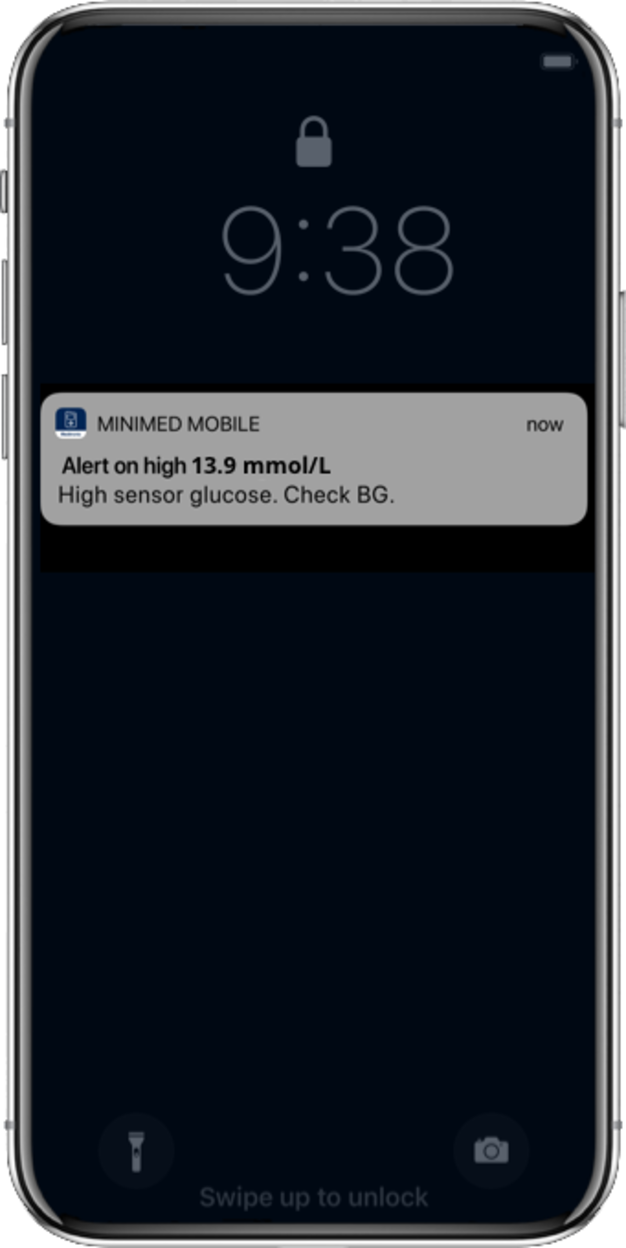
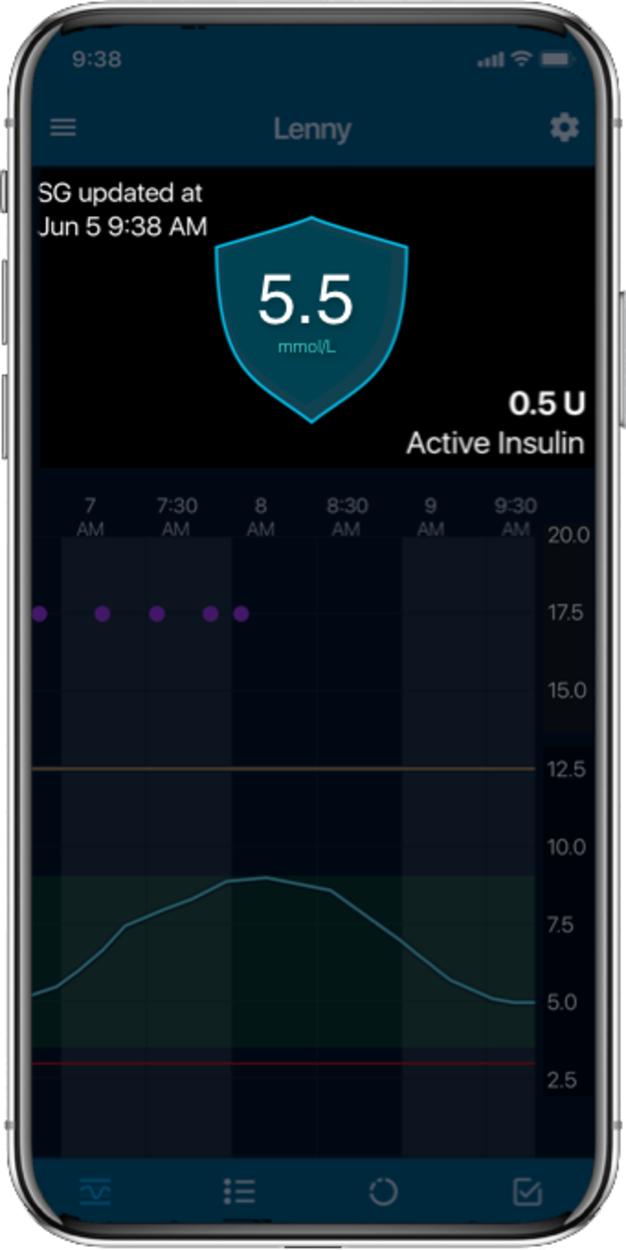
Yes. With the MiniMed™ 780G system you can easily track your glucose levels and view notifications and alerts on your smartphone. Up to 5 care partners can be invited to download the CareLink™ Connect app and view your real-time glucose values on their phones. Available to download at no cost for most iOS and Android smartphones. To see if your smartphone is compatible, see this reference chart.

The MiniMed™ 780G system automatically  adjusts insulin delivery and corrects glucose levels every 5 minutes 24/7, requiring no finger pricks . It features an advanced level of automation for diabetes management, known as SmartGuard™ technology. If your glucose levels are trending high, it gives you more insulin. If they are trending low, it gives you less or no insulin at all. Now it can even correct high glucose levels in cases where carb counts aren’t exact.

The MiniMed™ 780G system, automatically  adjusts delivery of basal insulin based on Continuous Glucose Monitoring (CGM) values. This means that the pump gets glucose readings from Instinct sensor and transmitter automatically, and then delivers a variable rate of insulin, 24 hours a day based on your personal needs. This integrated system – meaning having a pump and a CGM that speak to one another – can help to stabilise your glucose levels and reduce both high and low glucose levels.

When you use an insulin pump, you have a dramatic reduction in injections – by up to 90%.** The infusion set that attaches to your body contains a small, flexible plastic cannula that is inserted to be placed under the skin and changed every 2-3 days. A CGM glucose sensor is inserted every 7 days. Using the SmartGuard™ feature does not completely replace finger pricks but you will likely check your BG less frequently. Sensor readings are taken from your interstitial fluid (fluid surrounding the cells in your tissue) and not your blood, you still need to test using a BG meter. With Guardian™ 4 sensor and transmitter a blood glucose reading is needed when you first enter SmartGuard™ feature, otherwise no finger pricks are required. If glucose alerts and CGM readings do not match your symptoms, use a blood glucose meter to make diabetes treatment decisions. It is important to know that all blood glucose values entered & accepted are used for calibration. Refer to System User Guide - SmartGuard™ feature. Some user interaction required.
*Assumes four injections per day for 30 days and one infusion set change every two to three days.

*At the time of manufacture and when the reservoir and tubing are properly inserted, your pump is waterproof. It is protected against the effects of being underwater to a depth up to 2.4 meters (8 feet) for up to 30 minutes. Although it’s designed to be waterproof, drops and bumps that occur over time can make it more vulnerable to damage from water. We recommend removing your pump before swimming or bathing. CGM readings may not be transmitted from the sensor to the pump while in water.

  1. Get started by contacting us https://www.medtronic-diabetes.com/en-gb/contact so we can have someone follow up with you. We will help answer any questions, discuss out-of-pocket costs, if you plan to self fund sensors.
  2. Once the system is purchased and shipped, we will work with you to schedule your training. We have a robust technical support team who will help conduct an in-person training. (With the use of CGM and SmartGuard™ tech. You may need a few training sessions.)
  3. Once you’re trained, we will continue to support you throughout your journey with us. We will provide ongoing educational resources and also offer a dedicated Technical Support team who are available 24/7.

If you are a current customer, contact us https://www.medtronic-diabetes.com/en-gb/contact#form-popup - to discuss your options for upgrading.

If you are a healthcare professional we encourage you to visit https://hcp.medtronic-diabetes.com/en-GB

Information contained herein is not medical advice and should not be used as an alternative to speaking with your doctor. Discuss indications, contraindications, warnings, precautions, potential adverse events and any further information with your healthcare professional. Please consult your healthcare professional for a full list of benefits, indications, precautions, clinical results and other important medical information that pertains to the therapy or products discussed. See the device manuals for detailed information regarding the instructions for use, indications, contraindications, warnings, precautions and potential adverse events. For further information, contact your local MiniMed representative.

References

  1. dQ&A US Patient Voice Q2 2025. p. 77. n=2152. Data on file. Abbott Diabetes Care, Inc.
  2. Choudhary P, et al. Diabetes Technol Ther 2024; 26 (Suppl. 3): S32-S37.
  3. Arrieta A, et al. Diabetes Obes Metab. 2022; doi: 10.1111/dom.14714. Mean 80% TIR is reached using the recommended optimal settings of 2 hours active insulin time and 100 mg/dL (5.5 mmol/L) as glucose target for at least 90% of the time.
  4. McVean, et al. Diabetes Obes Metab. 2026;28(3):2456-2460
  5. De Meulemeester J. The association of chronic complications with time in tight range and time in range in people with type 1 diabetes: a retrospective cross-sectional real-world study. Diabetologia. 2024;67(8):1527-1535. doi:10.1007/s00125-024-06171-y
  6. Petrovski G, et al. Diabetes Care 2023;46(3):544–550
  7. Di Molfetta S, Di Gioia L, Caruso I, et al. Efficacy and Safety of Different Hybrid Closed Loop Systems for Automated Insulin Delivery in People With Type 1 Diabetes: A Systematic Review and Network Meta-Analysis. Diabetes Metab Res Rev. 2024;40(6):e3842. doi:10.1002/dmrr.3842
  8. Data on file, Abbott Diabetes Care, Inc.
  9. Fusselman H, et al. FUSS2015D-P - The Extended Wear Infusion Set - A Design for Plastic Waste Reduction. Virtual Diabetes Technology Meeting. 2020
  10. Alwan et al. (2023) doi: 10.1177/19322968231185348
  11. Kovatchev et al. (2022) doi:10.2337/dc22-1217
  12. Forlenza et al. (2024) doi:10.1089/dia.2023.0578
  13. Wheeler BJ, et al. Acta Diabetol. 2022;59(1):31-37.
  • * Adults, T1 and parents of children with T1 diabetes < 18 years were surveyed based on their experience with Guardian™ 4 sensor.
  • ** Compared to MDI + isCGM
  • ^ Refer to System User Guide - SmartGuard™ feature. Some user interaction required
  • ^^ A blood glucose (BG) reading is needed when entering SmartGuard™ feature. If glucose alerts and CGM readings do not match your symptoms, use a BG meter to make diabetes treatment decisions. Refer to System User Guide - SmartGuard™ feature. Some user interaction required.
  • # Due to inherent real-world study limitations, caution is advised when attempting to extrapolate these results to new patients. There could be significant differences. Overnight period: 12:00 AM- 6:00 AM [24:00 h – 06:00 h]. Number of users with ≥10 days of sensor glucose data
  • ∞ Reached using optimal settings. Optimal settings are glucose target at 100 mg/dL (5.5 mmol/L) and Active Insulin Time (AIT) at 2 hours and used >95% of the time
  • § Multiple Daily Injections (3 bolus and 1 basal insulin per day) requires 28 injections per week vs. 1 with Medtronic Extended Infusion Set.
  • ◊ Based on RWE publications.
  • ~ The people with diabetes testimonials relates to the account of an individual's response to the treatment. The account is genuine, typical and documented. However, the individual's response does not provide any indication, guide, warranty or guarantee as to the response other people with diabetes may have to the treatment. The response other people with diabetes have to the treatment could be different. Responses to the treatment discussed can and do vary and specific to the individual people with diabetes.
  • ¥ Refer to Accu-Chek® Guide Link User's Manual
  • 1.dQ&A US Patient Voice Q2 2025. p. 77. n=2152. Data on file. Abbott Diabetes Care, Inc.
  • 2.Choudhary P, et al. Diabetes Technol Ther 2024; 26 (Suppl. 3): S32-S37.
  • 3.Arrieta A, et al. Diabetes Obes Metab. 2022; doi: 10.1111/dom.14714. Mean 80% TIR is reached using the recommended optimal settings of 2 hours active insulin time and 100 mg/dL (5.5 mmol/L) as glucose target for at least 90% of the time.
  • 4.McVean, et al. Diabetes Obes Metab. 2026;28(3):2456-2460
  • 5.De Meulemeester J. The association of chronic complications with time in tight range and time in range in people with type 1 diabetes: a retrospective cross-sectional real-world study. Diabetologia. 2024;67(8):1527-1535. doi:10.1007/s00125-024-06171-y
  • 6.Petrovski G, et al. Diabetes Care 2023;46(3):544–550
  • 7.Di Molfetta S, Di Gioia L, Caruso I, et al. Efficacy and Safety of Different Hybrid Closed Loop Systems for Automated Insulin Delivery in People With Type 1 Diabetes: A Systematic Review and Network Meta-Analysis. Diabetes Metab Res Rev. 2024;40(6):e3842. doi:10.1002/dmrr.3842
  • 8.Data on file, Abbott Diabetes Care, Inc.
  • 9.Fusselman H, et al. FUSS2015D-P - The Extended Wear Infusion Set - A Design for Plastic Waste Reduction. Virtual Diabetes Technology Meeting. 2020
  • 10.Alwan et al. (2023) doi: 10.1177/19322968231185348
  • 11.Kovatchev et al. (2022) doi:10.2337/dc22-1217
  • 12.Forlenza et al. (2024) doi:10.1089/dia.2023.0578
  • 13.Wheeler BJ, et al. Acta Diabetol. 2022;59(1):31-37.
  • 1.
  • 2.
  • 3.
  • * Adults, T1 and parents of children with T1 diabetes < 18 years were surveyed based on their experience with Guardian™ 4 sensor.
  • ** Compared to MDI + isCGM
  • ^ Refer to System User Guide - SmartGuard™ feature. Some user interaction required
  • ^^ A blood glucose (BG) reading is needed when entering SmartGuard™ feature. If glucose alerts and CGM readings do not match your symptoms, use a BG meter to make diabetes treatment decisions. Refer to System User Guide - SmartGuard™ feature. Some user interaction required.
  • # Due to inherent real-world study limitations, caution is advised when attempting to extrapolate these results to new patients. There could be significant differences. Overnight period: 12:00 AM- 6:00 AM [24:00 h – 06:00 h]. Number of users with ≥10 days of sensor glucose data
  • ∞ Reached using optimal settings. Optimal settings are glucose target at 100 mg/dL (5.5 mmol/L) and Active Insulin Time (AIT) at 2 hours and used >95% of the time
  • § Multiple Daily Injections (3 bolus and 1 basal insulin per day) requires 28 injections per week vs. 1 with Medtronic Extended Infusion Set.
  • ◊ Based on RWE publications.
  • ~ The people with diabetes testimonials relates to the account of an individual's response to the treatment. The account is genuine, typical and documented. However, the individual's response does not provide any indication, guide, warranty or guarantee as to the response other people with diabetes may have to the treatment. The response other people with diabetes have to the treatment could be different. Responses to the treatment discussed can and do vary and specific to the individual people with diabetes.
  • ¥ Refer to Accu-Chek® Guide Link User's Manual
  • ^ Refer to System User Guide - SmartGuard™ feature. Some user interaction required
  • ^^ A blood glucose (BG) reading is needed when entering SmartGuard™ feature. If glucose alerts and CGM readings do not match your symptoms, use a BG meter to make diabetes treatment decisions. Refer to System User Guide - SmartGuard™ feature. Some user interaction required.
  • # Due to inherent real-world study limitations, caution is advised when attempting to extrapolate these results to new patients. There could be significant differences. Overnight period: 12:00 AM- 6:00 AM [24:00 h – 06:00 h]. Number of users with ≥10 days of sensor glucose data
  • ∞ Reached using optimal settings. Optimal settings are glucose target at 100 mg/dL (5.5 mmol/L) and Active Insulin Time (AIT) at 2 hours and used >95% of the time

CE-DBA-2600170© 2026 Medtronic. MiniMed and MiniMed logo are trademarks of Medtronic MiniMed, Inc.

The sensor shape and appearance, Abbott and “a” logo are marks and/or designs of the Abbott group of companies in various territories and used under licence. Sensor image © 2026 Abbott.

*Third–party brands are trademarks of their respective owners.